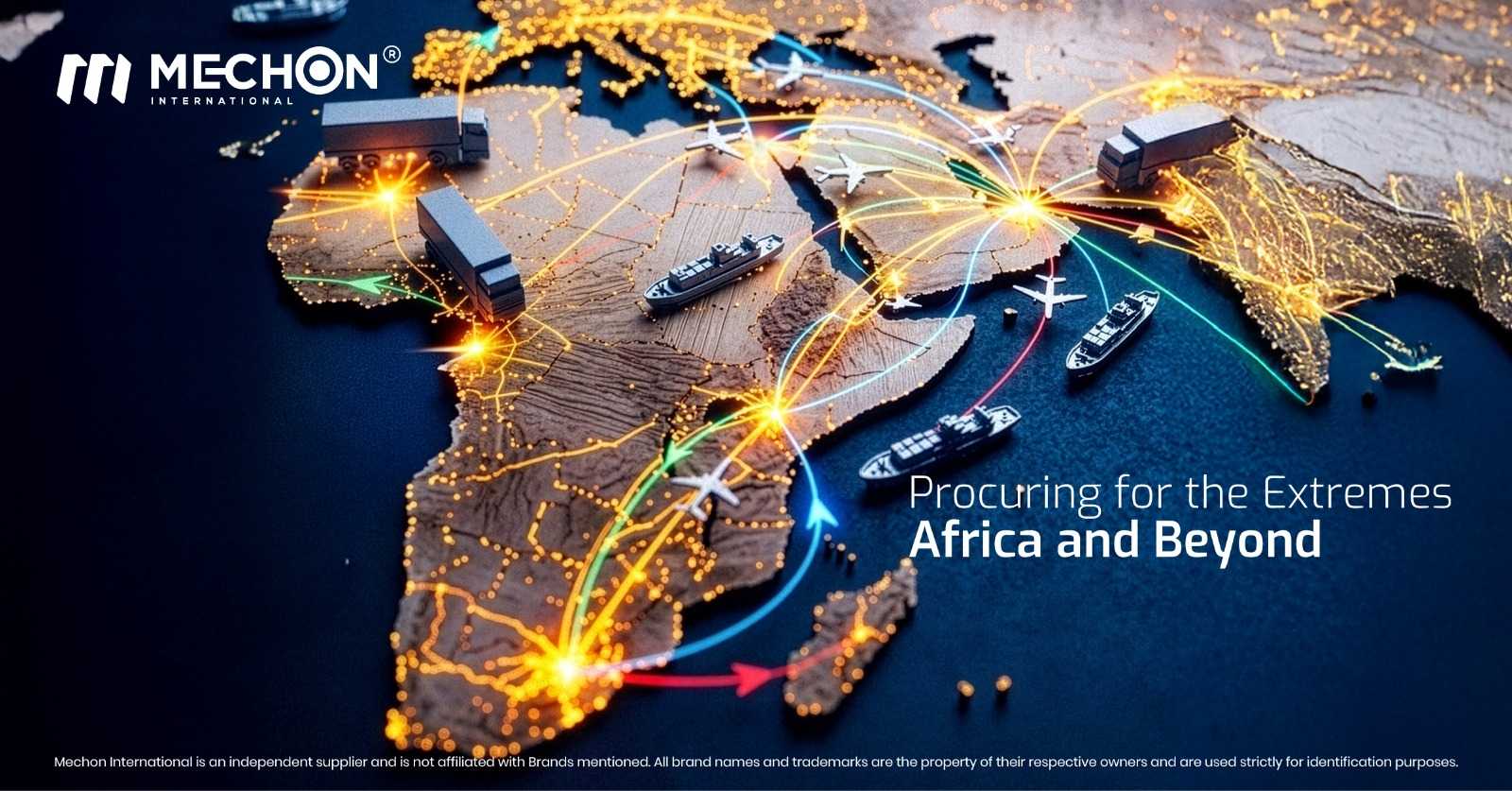
Procuring for the Extremes: Africa and Beyond
The traditional procurement playbook was written in climate-controlled offices in London, New York, and Singapore. It assumes a "default" state of efficiency: paved roads, stable electricity, predictable customs, and high-speed internet.
But global growth is shifting. The next frontier of the global economy isn't found in the "norm"—it is found in the "extremes." In Africa, procurement is not a simple exercise in cost-reduction or "Price\times\Quantity." It is a high-stakes navigation of fragmented infrastructure, shifting bureaucratic landscapes, and the brutal "last-mile" reality that can turn a profitable venture into a logistical nightmare overnight. To win here, businesses must move from an efficiency-first mindset to a resilience-first philosophy.
1. The Landscape of the Extreme: A Tale of Two Africa’s
To procure effectively in Africa, one must first discard the notion of the continent as a monolith. The landscape is defined by a sharp duality.
The Digital Hubs
Cities like Nairobi, Lagos, and Kigali are rapidly becoming "Silicon Savannahs." Here, procurement is increasingly high-tech. You have access to mobile-money ecosystems (like M-Pesa), tech-savvy vendors, and burgeoning e-logistics startups. In these hubs, the challenge is often managing the sheer speed of growth and the competition for reliable suppliers.
The infrastructure-Lean Regions
Contrast this with remote or rural districts where the "last mile" feels more like a marathon. Here, infrastructure is a variable, not a constant. Procurement officers must account for:
- Seasonal Volatility: A road that exists in January might be a river in July.
- Energy Gaps: Cold chain procurement becomes infinitely more complex when "consistent power" isn't guaranteed.
- The Trust Deficit: In the absence of formal credit scores, building local relationships is the only viable vetting process.
2. Agile Procurement: From "Just-in-Time" to "Just-in-Case"
For decades, the global gold standard was Just-in-Time (JIT) procurement—minimizing inventory to maximize cash flow. In extreme markets, JIT is a recipe for failure.
The "Just-in-Case" Model
In Africa, "lean" is often "fragile." Strategic procurement requires buffer stocks. Whether it is industrial supplies in Africa or construction materials in Ethiopia, having a 30% to 50% safety stock isn't "wasteful"—it’s a strategic insurance policy against border delays, port congestion, or political shifts.
Localized Sourcing & Diversification
Relying on a single international "mega-supplier" is risky. Extreme market procurement favours hyper-localization. By sourcing goods or raw materials from local vendors:
- You mitigate the risk of currency fluctuations.
- You bypass the 45-day lead times of international shipping.
- You build a political and social "license to operate" within the community.
3. The Digital Shield: Solving the Trust Deficit
Transparency is the greatest casualty of "extreme" procurement. When supply chains are opaque, costs rise and "leakage" (corruption) becomes rampant. This is where digitalization moves from a "nice-to-have" to a survival tool.
E-Procurement & Mobile Integration
In many African markets, the smartphone has leapfrogged the desktop. Cloud-based e-procurement platforms allow managers to track spend in real-time, even from thousands of miles away. Mobile payment integration ensures that vendors are paid instantly upon delivery, fostering trust and ensuring loyalty from the best local suppliers.
The Blockchain Edge
Blockchain technology is beginning to play a massive role in provenance and anti-corruption. By creating an immutable ledger of transactions and certifications, companies can ensure that the "local" supplier they are paying actually meets international safety and ethical standards. It turns "blind trust" into "verified data."
4. Sustainability & Social Impact: The ESG Mandate
In the "extremes," procurement is the most powerful tool for social change. "Extreme" markets are often the most vulnerable to climate change and economic instability. Therefore, your procurement strategy is your ESG strategy.
Why ESG Matters for Long-Term Viability
- Climate Resilience: Procuring from suppliers who use renewable energy or drought-resistant logistics ensures your own supply chain doesn't collapse during the next climate event.
- Social License: If a multinational procures only from foreign entities, they risk local backlash. Investing in Supplier Diversity—specifically targeting women-owned or youth-led African enterprises—creates a stable, loyal ecosystem of partners.
- Governance: Rigorous digital procurement trails satisfy international regulators and protect your brand’s reputation.
Conclusion: The New Frontier
Procuring for the extremes—in Africa and beyond—requires a blend of high-tech tools and boots-on-the-ground wisdom. It’s about accepting that the shortest path between two points isn't always a straight line; it's the path with the most reliable backups.
The companies that master this won't just survive in Africa; they will build the blueprints for the next century of global trade. We at Mechon International, understand this with our global hubs in UAE, Africa, USA and India. Reach out to us to get your free quote now!
