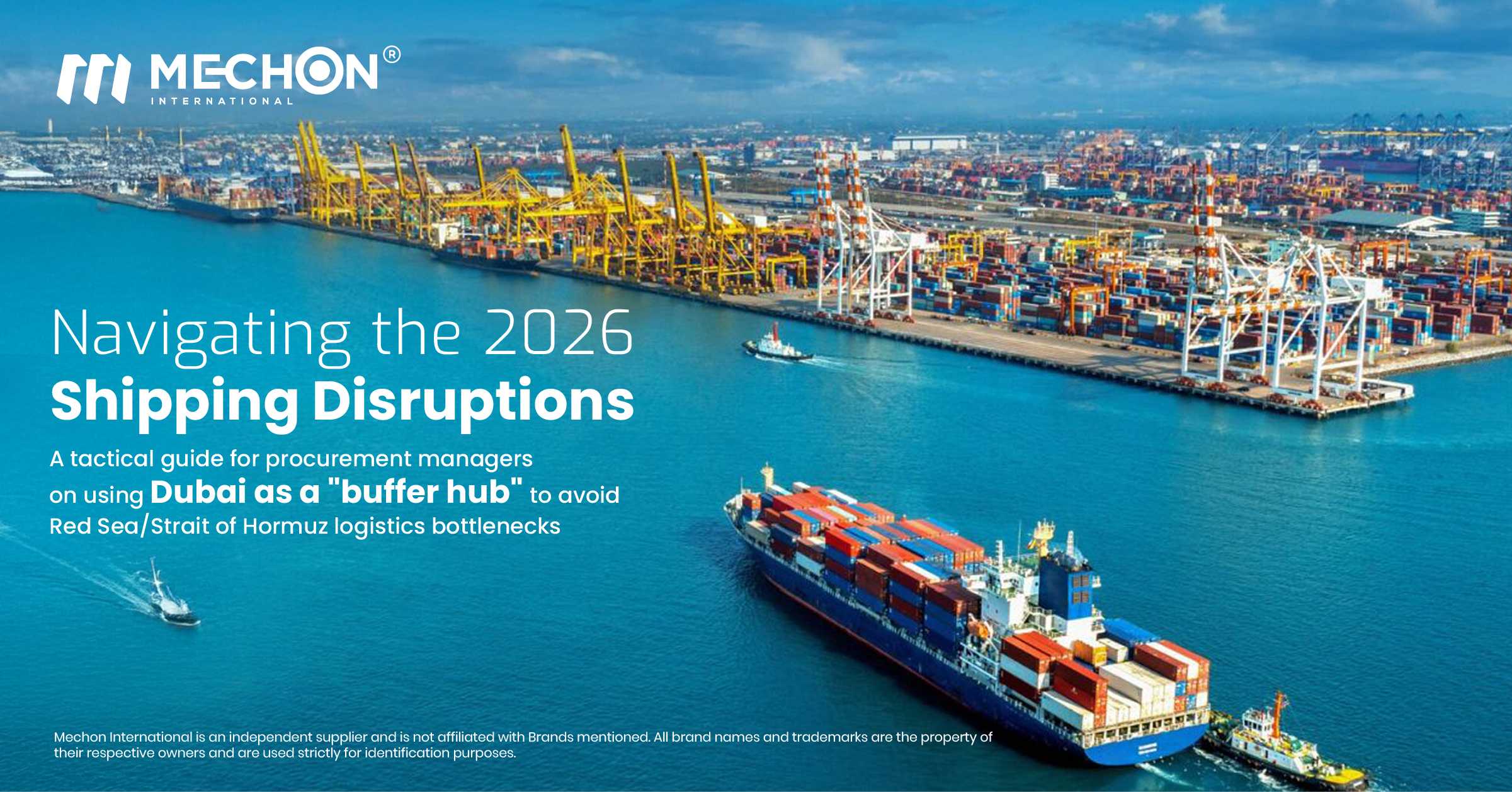
Navigating 2026 Shipping Disruptions: The Dubai Buffer Hub Strategy
1. The Multi-Modal Switch: Jebel Ali to Al Maktoum
When the Red Sea becomes a bottleneck, speed is the only currency. Dubai’s unique "Sea-to-Air" corridor allows cargo to be offloaded at Jebel Ali Port and transferred to Al Maktoum International Airport in under four hours. For critical industrial spares, this bypasses the maritime chokepoints entirely, ensuring your "Cat Fleet" or "Liebherr" units never go dark.
2. Strategic Near-Port Warehousing
Avoid "Just-in-Time" failures by shifting to "Just-in-Case" proximity. By utilizing Dubai’s Free Zones, procurement managers can hold buffer stock of high-wear components—like hydraulic seals or engine filters—outside of high-conflict zones. This ensures that even if a vessel is rerouted around the Cape of Good Hope, your local regional supply remains untouched.
3. Verification at the Point of Entry
Disruptions often invite the "Grey Market" to fill the void with substandard parts. While using Dubai as your hub, it is vital to implement Positive Material Identification (PMI) at the warehouse level. Ensuring that the parts sitting in your buffer are chemically and mechanically authentic is the only way to prevent a secondary crisis of premature equipment failure.
4. AI-Driven Sourcing Integration
In 2026, spreadsheets are obsolete. Advanced procurement teams are using AI-driven sourcing to analyse real-time maritime data, automatically rerouting shipments to Dubai hubs before a bottleneck even forms. This proactive stance reduces lead times and protects the "Durability Dividend" of your machinery assets.
